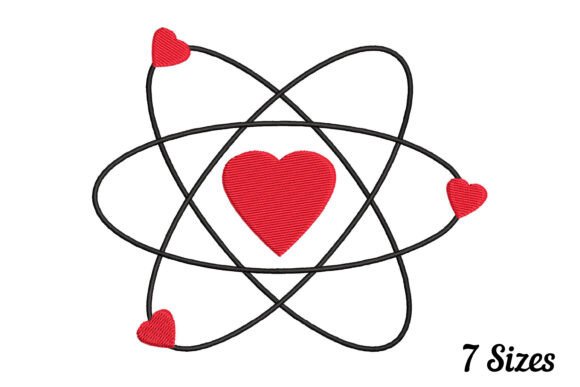
Atom Icon Heart: A Practical Evaluation for Embroidery Projects
In the realm of textile customization, the intersection of scientific motifs and emotional symbolism often yields unique design opportunities. The Atom Icon Heart is a machine embroidery design that merges the geometric precision of an atomic structure with the universally recognized shape of a heart. This design offers a distinct aesthetic for those looking to add character to fabrics without relying on traditional floral or script-based patterns. For hobbyists and professionals alike, understanding the practical applications, technical requirements, and stylistic implications of this design is essential before integrating it into a project.
Understanding the Atom Icon Heart Design
The Atom Icon Heart is not merely a decorative graphic; it is a structured digital file intended for use with computerized embroidery machines. Visually, the design typically features a central nucleus surrounded by orbiting electrons, arranged in a way that mimics the contours of a heart. This fusion creates a balanced composition that appeals to both modern minimalism and retro-scientific themes. Unlike hand-drawn sketches, machine embroidery designs are constructed with specific stitch types, densities, and underlay patterns to ensure stability on various fabric types.
When evaluating this design, it is important to recognize that it comes as a digital asset compatible with multiple embroidery file formats. These formats, such as .PES, .DST, .JEF, and others, allow the design to be loaded onto a wide range of commercial and domestic embroidery machines. The versatility of the file formats ensures that the design can be scaled appropriately for different hoop sizes while maintaining structural integrity during the stitching process.
Reasons to Consider This Design
There are several compelling reasons why an individual might select the Atom Icon Heart for their next textile project. First, the design serves as a conversation starter due to its dual symbolism. It appeals to audiences interested in science, chemistry, or physics, while simultaneously conveying warmth and affection through the heart motif. This makes it particularly effective for gifts targeting educators, scientists, or students who appreciate a blend of intellect and emotion.
Secondly, the geometric nature of the design often translates well across different materials. Because the lines are relatively clean and the shapes are defined, the design tends to hold up well on textured surfaces like terry cloth towels or knitted t-shirts. The symmetry of the atom structure provides a natural balance that prevents the design from appearing lopsided, even when placed off-center on a garment. Additionally, the availability of multiple file formats reduces the barrier to entry, allowing users with various machine brands to utilize the same creative asset without compatibility issues.
Benefits and Tradeoffs
Adopting the Atom Icon Heart offers distinct benefits, primarily centered around versatility and visual impact. The design's compact nature allows it to fit within standard 4x4 inch hoops, making it accessible for home sewers with smaller machines. Its artistic touch can elevate basic items, turning a plain white towel into a personalized gift or a generic tote bag into a statement piece. Furthermore, because the design relies on outlines and distinct shapes rather than heavy fill stitches, it generally requires less thread consumption compared to dense, realistic imagery.
However, there are tradeoffs to consider. The intricate details of the electron orbits may require precise tension settings on the embroidery machine. If the tension is too loose, the fine lines defining the orbits may become indistinct or pucker the fabric. Conversely, if the density is too high, the fabric—especially delicate synthetics—may suffer from distortion. Users must also consider color limitations; while the design looks striking in monochrome, using multiple thread colors to differentiate the nucleus and electrons adds complexity to the production time and cost.
Another consideration is the learning curve for scaling. While the design is versatile, resizing it beyond recommended limits can compromise the stitch count and definition. Reducing the size too much may cause the threads to bunch, while enlarging it excessively might leave gaps in the fill areas or make the design look disproportionate on larger garments.
Ideal Applications and Contexts
The Atom Icon Heart finds its strongest fit in projects where a modern, slightly intellectual aesthetic is desired. It is an excellent choice for:
- Casual Apparel: T-shirts, hoodies, and caps benefit from the design's ability to stand out without overwhelming the wearer. It works particularly well on darker fabrics where light-colored thread creates high contrast.
- Home Decor: Kitchen towels, bath linens, and pillowcases can be enhanced with this motif, adding a cheerful yet sophisticated touch to a bathroom or kitchen setting.
- Event Merchandise: For science fairs, educational workshops, or themed parties, this design serves as a cohesive branding element that is more engaging than standard text logos.
- Gift Personalization: It is a strong candidate for customizing gifts for partners, friends, or family members who have a passion for STEM fields but also value sentimental gestures.
In these scenarios, the design acts as a focal point that defines the character of the item. Its artistic nature allows it to bridge the gap between functional utility and decorative art, making it suitable for both everyday use and display purposes.
When to Consider Alternatives
Despite its strengths, the Atom Icon Heart may not be the optimal choice for every situation. If the target audience prefers traditional, soft, or organic aesthetics, this geometric design might feel too rigid or clinical. For example, on baby clothing or items intended for very young children, softer motifs like animals or clouds often resonate better than scientific structures.
Furthermore, if the project involves extremely stretchy or unstable fabrics, such as jersey knit without stabilizers, the precision required for the atom's orbits might lead to registration errors. In such cases, simpler designs with fewer distinct elements or larger fill areas might yield better results. Similarly, if the goal is mass production with tight turnaround times, the potential need for multiple thread changes (if utilizing color) could slow down the workflow compared to single-color, solid-fill designs.
Finally, consider the brand identity or personal style being projected. If the desired image is one of rustic charm, vintage elegance, or bohemian flair, the clean lines of an atomic symbol may clash with the overall theme. In these instances, exploring designs with more texture, shading, or irregular shapes might align better with the intended outcome.
Practical Decision-Making Insights
To determine if the Atom Icon Heart aligns with your specific goals, begin by assessing the fabric type and the capabilities of your embroidery machine. Ensure that your machine can handle the stitch count and detail level of the design without compromising quality. Test the design on a scrap piece of the intended fabric to evaluate how the threads interact with the material's weave and stretch.
Consider the end-user and the context in which the item will be used. Does the recipient appreciate the blend of science and sentiment? Is the item meant for daily wear where durability is key, or is it a decorative piece where visual impact takes precedence? By weighing these factors against the design's characteristics, you can make an informed decision that balances aesthetic appeal with practical execution.
Ultimately, the Atom Icon Heart is a tool for creative expression that offers a unique alternative to conventional embroidery patterns. Its success depends largely on thoughtful application, proper machine setup, and a clear understanding of the design's strengths and limitations. When used correctly, it adds a distinctive layer of character to textiles, proving that even small details can significantly enhance the final product.