Botanical Journal: A Comparative Guide to Open Book Embroidery Designs
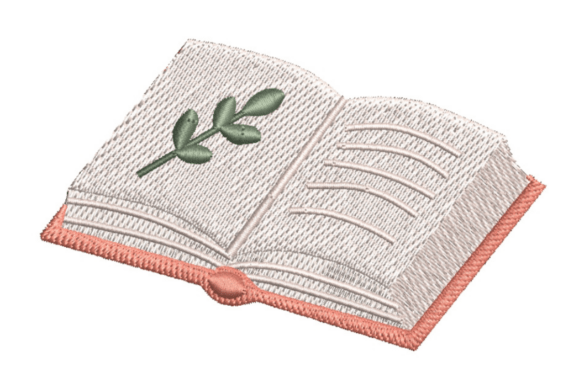
For enthusiasts of textile art, the intersection of literature and nature has long provided a rich vein of inspiration. The Botanical Journal machine embroidery design captures this specific aesthetic by combining the structural charm of an open book with delicate leaf detailing. This design is not merely a decorative motif; it represents a curated visual language that appeals to book lovers, journaling communities, and those drawn to the cozy cottagecore movement. When evaluating digital embroidery assets, understanding the distinct characteristics of a design like Botanical Journal is essential for determining its suitability for specific projects, machines, and skill levels.
Defining the Aesthetic and Structural Elements
The core appeal of the Botanical Journal lies in its composition. Unlike abstract floral patterns or standalone botanical illustrations, this design anchors the organic elements within a recognizable man-made object: an open book. The pages are rendered with sufficient detail to suggest texture without overwhelming the stitch count, while the surrounding foliage introduces softness and movement. This duality creates a balanced visual weight that works well on various substrates, from heavy canvas tote bags to lighter linen garments.
What distinguishes Botanical Journal from generic floral designs is the narrative implication. An open book suggests a story, knowledge, or a personal sanctuary, while the leaves imply growth and nature. This combination resonates deeply with the current trend of "cozy" aesthetics, where comfort and nostalgia are paramount. For the adult crafter aged 20 to 50, who often seeks meaning in their creative outputs, this design offers more than just decoration; it serves as a symbol of intellectual curiosity and a connection to the natural world.
From a technical standpoint, the design is engineered to accommodate the nuances of machine stitching. The leaf details are executed with fine stitches that require precise tension control, ensuring that the delicate veins and edges do not blur into a single mass. This level of detail demands a certain degree of machine capability, making it a strong candidate for mid-to-high-end home embroidery units as well as commercial hoop systems.
Evaluating Format Compatibility and Machine Requirements
One of the most critical factors in selecting a digital embroidery file is format compatibility. The Botanical Journal package includes multiple file formats, addressing a common pain point for hobbyists and professionals alike. Embroidery machines vary significantly in their proprietary software requirements; a design saved in one format may be unusable on another machine without conversion. By providing a suite of standard formats, this design eliminates the need for third-party conversion software, which can sometimes degrade stitch quality or alter the intended dimensions.
When comparing this approach to single-format downloads, the multi-format option offers distinct advantages in workflow efficiency. It allows users to switch between different machines—perhaps a smaller portable unit for quick embellishments and a larger industrial-style machine for bulk production—without interruption. However, users should remain aware that even with the correct file format, the physical limitations of their machine's hoop size must be considered. While the design is versatile, the open book motif requires a specific rectangular area to maintain its proportions. Attempting to force the design into a circular hoop or a significantly smaller frame could result in distorted imagery or stitching errors.
Furthermore, the stitch density within the Botanical Journal design is calibrated for general-purpose needles and standard polyester or rayon threads. For those using specialty threads, such as metallics or variegated cottons, the dense leaf areas may require slight adjustments to tension settings. This is a tradeoff inherent in detailed designs; higher resolution visuals necessitate more careful machine setup compared to simple, low-stitch-count monograms.
Comparing Styles: Cottagecore vs. Minimalist Embroidery
In the broader landscape of machine embroidery, designs generally fall into categories ranging from minimalist line work to complex, saturated scenes. Botanical Journal sits comfortably in the middle ground, offering enough detail to be visually engaging without becoming overly labor-intensive. When compared to minimalist styles, which often rely on negative space and single-color outlines, Botanical Journal provides a richer texture. This makes it superior for projects where the embroidery is the focal point, such as the center of a pillowcase or the chest pocket of a denim jacket.
Conversely, when weighed against highly complex, photo-realistic embroidery, Botanical Journal offers significant time and resource savings. Complex designs often require hundreds of thousands of stitches, leading to longer run times, increased thread consumption, and a higher risk of fabric puckering. The Botanical Journal design strikes a practical balance, delivering a high-impact look with a moderate stitch count. This efficiency is particularly valuable for small business owners producing handmade goods, as it reduces production time per unit while maintaining a premium aesthetic.
Another comparison point is the thematic specificity. Many available designs focus solely on flora, ignoring the contextual elements that give them character. By integrating the book element, Botanical Journal carves out a niche that purely botanical designs cannot fill. It is specifically tailored for audiences interested in literacy, writing, and study themes. If a project aims to celebrate a library, a reading club, or a writer's retreat, this design is functionally superior to a generic flower pattern because it communicates a specific message instantly.
Strengths and Tradeoffs in Application
- Narrative Depth: The inclusion of the book adds a layer of storytelling that plain floral motifs lack, making it ideal for gifts for teachers, writers, or avid readers.
- Versatility in Fabric: The design scales well across medium-weight fabrics but may struggle on very thin materials unless stabilized heavily.
- Stitch Complexity: While detailed, the design avoids excessive underlay issues common in larger, denser patterns, reducing the likelihood of hooping errors.
- Limitation: The specific theme may limit its use in contexts requiring gender-neutral or non-literary aesthetics, unlike abstract geometric patterns.
Determining the Right Fit for Your Projects
Deciding whether Botanical Journal is the right choice depends largely on the intended end product and the target audience. For individuals creating personalized gifts, this design is an excellent option. Imagine embroidering this motif onto a leather-bound journal cover, a linen tea towel for a kitchen enthusiast, or a canvas tote bag for a bookstore patron. The imagery aligns perfectly with the recipient's interests, adding a thoughtful touch that generic designs fail to achieve.
However, there are scenarios where alternative options might be preferable. If the goal is to create a large-scale wall hanging or a blanket where the design needs to repeat seamlessly, a standalone floral pattern might be more effective. The open book shape of Botanical Journal is inherently singular and centered; it does not lend itself easily to tiling or repeating borders without significant modification. Similarly, if the project requires a very small footprint, such as a buttonhole or a tiny patch, the intricate leaf details may become indistinguishable at reduced sizes. In these cases, a simplified icon or a monogram would serve the purpose better.
Cost considerations also play a role in the decision-making process. While digital files are generally affordable, the value derived from them varies. For a professional seamstress looking to expand a product line with a "cottagecore" collection, investing in a design with multiple formats and clear thematic identity like Botanical Journal offers a higher return on investment. It streamlines the production process and ensures a consistent brand aesthetic. For a casual hobbyist working on a one-off project, the cost-benefit analysis remains positive, provided the user has the necessary stabilizers and thread colors to bring out the design's potential.
Practical Implementation and Best Practices
To maximize the quality of the Botanical Journal embroidery, proper preparation is key. Because the design features fine lines in the leaves, using a high-quality tear-away or cut-away stabilizer is recommended. Lightweight fabrics, such as cotton lawn or silk, will require a heavier stabilizer to prevent puckering around the dense leaf clusters. Additionally, testing the design on a scrap piece of the same fabric is crucial. This allows the user to verify that the stitch density matches their machine's capabilities and that the color transitions flow naturally.
Color selection can dramatically alter the mood of the finished piece. While traditional greens and earth tones enhance the natural aspect, experimenting with pastels can lean further into the whimsical side of the cottagecore aesthetic. Conversely, using high-contrast black and white can give the design a more modern, graphic novel feel. The flexibility of the design allows for these variations, making it a robust tool for creative expression.
Ultimately, the Botanical Journal design stands out as a specialized yet accessible option for those seeking to merge literary and natural themes in their textile work. It offers a balanced approach to complexity, providing enough detail to impress without overwhelming the machine or the maker. By understanding its strengths, limitations, and ideal applications, crafters can make informed decisions about how best to incorporate this charming motif into their next project. Whether for personal enjoyment or commercial production, the design serves as a testament to the enduring appeal of stories told through thread and needle.