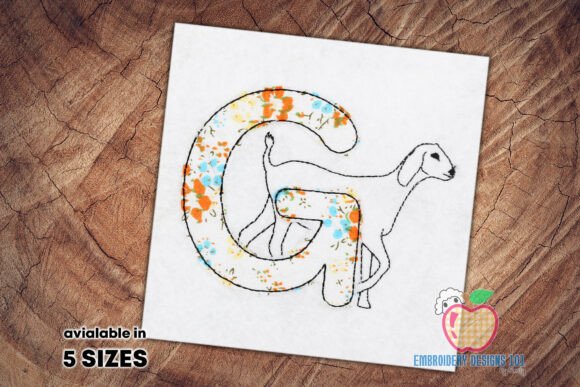
Alphabet G with Goat Applique: A Practical Review for Educators and Makers
In the realm of educational crafting and textile design, few assets bridge the gap between visual learning and tactile creation as effectively as a well-executed appliqué. The Alphabet G with Goat Applique is a specific digital design resource that targets this intersection. It presents the letter "G" in a distinct green hue, encircled by an orange goat, creating a clear phonetic association for young learners. For professionals ranging from early childhood educators to small business owners in the custom apparel sector, understanding the utility, technical specifications, and application potential of such designs is critical for project planning and resource allocation.
This review examines the Alphabet G with Goat Applique not merely as a decorative pattern, but as a functional tool for teaching literacy through art. By analyzing its structural components, size versatility, and the inclusion of instructional support materials, we can determine where it fits within a professional workflow and how it performs under real-world production constraints.
Design Philosophy and Visual Impact
The core value of the Alphabet G with Goat Applique lies in its adherence to established pedagogical principles regarding color coding and imagery. In early literacy education, associating a letter with a corresponding object—known as a keyword approach—is a standard method for reinforcing memory retention. Here, the letter "G" is rendered in green, while the accompanying goat is colored orange. This high-contrast color palette serves two purposes: it captures the attention of young children and visually separates the letterform from the illustrative element, preventing visual clutter.
From a design perspective, the positioning of the goat around the letter creates a cohesive unit rather than two disjointed elements. This layout is particularly effective for appliqué work, where the goal is often to create a single, unified patch or motif. The simplicity of the shapes ensures that the design remains legible even when scaled down, a crucial factor for machine embroidery where stitch density and definition can degrade with excessive detail. For creators looking to produce consistent branding for educational materials, this clarity offers a reliable foundation.
Technical Specifications and Scalability
One of the most significant strengths of the Alphabet G with Goat Applique is its scalability. Unlike static vector files that may require manual resizing and recalibration, this design comes pre-configured in five distinct sizes, ranging from 4 inches to 8 inches. This range covers the vast majority of standard embroidery hoops currently in use across both home and commercial settings.
- 4x4 Hoop: Ideal for small accessories like baby hats, keychains, or corner patches on tote bags.
- 5x7 Hoop: Perfect for standard t-shirt placements, bibs, or small backpacks.
- 6x10 Hoop: Suitable for larger garment applications, such as full-frontal designs on hoodies or pillowcases.
- 8x8 Hoop: Offers a square format suitable for quilt blocks or framed wall art.
- 8x12 Hoop: Provides maximum surface area for large banners, blankets, or detailed classroom displays.
The availability of these specific sizes eliminates the need for users to guess at scaling ratios, which can often lead to distorted imagery or thread tension issues. When a design is optimized for a specific hoop size, the stitch count is distributed efficiently, ensuring that the satin stitches defining the edges remain smooth and the fill stitches maintain appropriate density. This technical precision reduces waste time spent troubleshooting machine errors during production runs.
Workflow Efficiency and Instructional Support
A common pain point in machine appliqué is managing color changes and layering. Complex designs often require the operator to manually track which fabric pieces correspond to which stitch sequence. The Alphabet G with Goat Applique addresses this by including a PDF worksheet for each size variation. These documents provide a step-by-step guide detailing the required color changes.
For a freelancer managing multiple client orders, or a teacher leading a craft session with volunteers, this documentation is invaluable. It streamlines the setup process, allowing the operator to prepare all necessary fabric layers before starting the machine. The worksheets act as a quality control measure, ensuring that the final product matches the intended design exactly. Without such guides, there is a higher risk of skipping a layer or using the wrong shade of orange or green, which could compromise the educational clarity of the piece.
Furthermore, the inclusion of detailed stitch counts allows professionals to estimate production time accurately. Knowing the exact number of stitches helps in calculating labor costs for commissioned work or determining how many units can be produced within a specific timeframe. This level of transparency transforms the design from a simple image file into a manageable production asset.
Real-World Applications and Audience Fit
Who benefits most from the Alphabet G with Goat Applique? The primary audience includes early childhood educators, Montessori teachers, and special education specialists who utilize sensory-rich materials to teach the alphabet. In a classroom setting, this design can be applied to name tags, book covers, or interactive bulletin boards. The tactile nature of appliqué adds a textural dimension that printed paper cannot replicate, aiding in sensory integration for students with diverse learning needs.
Beyond education, small business owners specializing in personalized gifts find this design highly versatile. Parents seeking unique items for a child's nursery, such as appliquéd onesies, burp cloths, or crib bumpers, often look for designs that are both cute and developmental. The "G for Goat" concept is timeless and recognizable, making it a safe choice for gift-giving occasions like birthdays or baby showers.
Additionally, bloggers and content creators in the DIY and parenting niches can leverage this design to generate tutorial content. The clear instructions and multi-size options make it an excellent subject for "how-to" videos or blog posts demonstrating machine embroidery techniques. The design's reliability ensures that the resulting content looks professional, enhancing the creator's authority in their niche.
Quality Considerations and Limitations
While the Alphabet G with Goat Applique offers robust functionality, it is important to consider its limitations. As a machine appliqué design, the final aesthetic depends heavily on the quality of the backing material, the type of stabilizer used, and the skill of the operator. If the fabric chosen for the green letter or orange goat is too thick or too stretchy without proper stabilization, the edges may pucker or curl, detracting from the clean lines intended by the designer.
Furthermore, the color scheme is fixed in the design logic. While the PDF guides indicate color changes, the specific shades of green and orange are suggested based on the original artwork. Professionals working with strict brand guidelines or specific color palettes will need to source fabrics that closely match these requirements or accept slight variations. There is no inherent flexibility in the digital file to alter the colors directly; the user must manage this through physical fabric selection.
Another consideration is the target demographic. While the design is excellent for toddlers and preschoolers, it may appear too juvenile for older children or adult audiences. Therefore, its application should be carefully curated to ensure it aligns with the intended recipient's age group and preferences.
Final Assessment
The Alphabet G with Goat Applique represents a solid investment for anyone involved in educational crafting or custom textile production. Its combination of pedagogical soundness, technical versatility across five hoop sizes, and comprehensive instructional support makes it a practical asset. It removes the guesswork from scaling and color management, allowing professionals to focus on execution and creativity.
For educators, it provides a durable and engaging tool for literacy development. For entrepreneurs, it offers a reliable product template that minimizes production errors and maximizes output efficiency. While it requires careful attention to fabric choice and stabilization to achieve the best results, the design itself is structurally sound and ready for immediate implementation. Whether you are outfitting a classroom or launching a line of personalized children's wear, this design delivers consistent value and professional results.